
In Washington, the lights are on. Beneath the gold drapes of the Oval Office, Donald Trump mused to reporters about Cuba. “I think I will have the honour of taking it,” he said on 16 March. “Whether I free it, take it – I think I can do anything I want with it.”
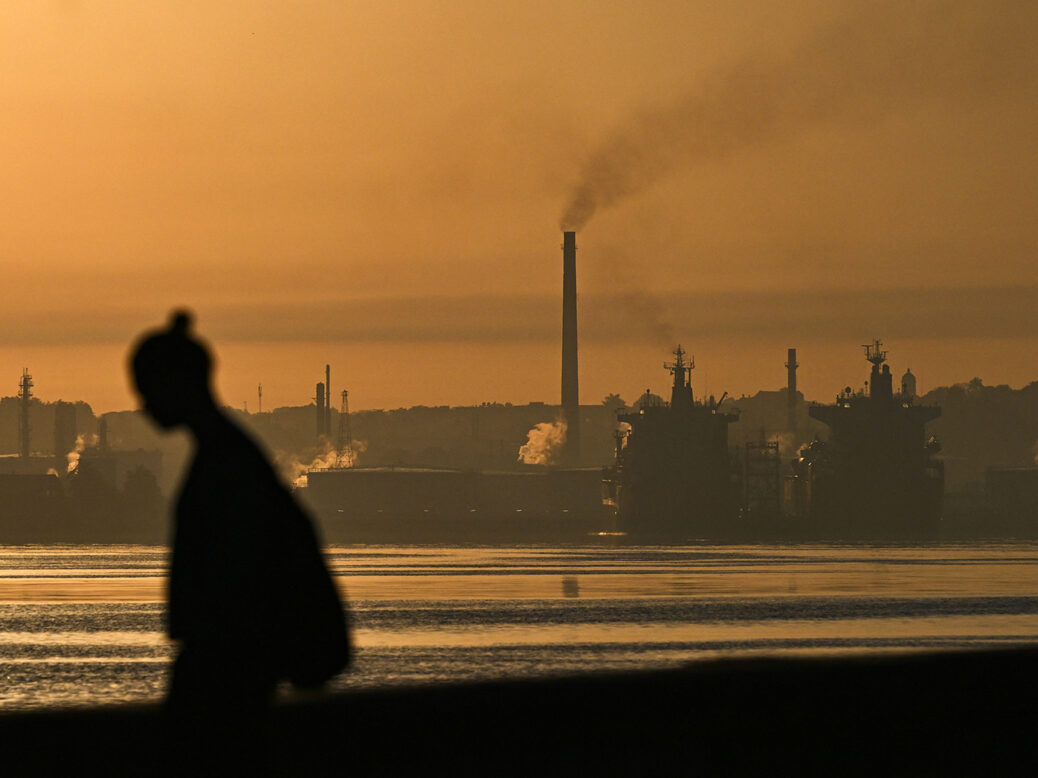
That same day, 1,100 miles to the south, an island went dark. Not rolling blackouts, not rationing. Total collapse. The entire Cuban national grid failed. Eleven million people were plunged into darkness. Hospitals switched to failing generators. Surgeries were postponed. Refrigeration broke down. Across Havana, rubbish accumulated in the streets – there was no fuel to collect it. For three months, the country had received no oil.
I arrived in Havana three days later. The lights were on at José Martí Airport, but the drive into the city was dim and subdued, with long stretches of darkness where streetlights and traffic would normally be. I was there as part of the Nuestra América Convoy, an international effort to deliver humanitarian supplies to the island, which takes its name from Martí’s essay of the same name. Hundreds of delegates – including Jeremy Corbyn and the Belfast rap group Kneecap – arrived by air and sea with medicines, food and solar equipment, and saw first hand the effects on life of Trump’s intensification of a long-standing US policy. For more than six decades, the US has pursued a strategy towards Cuba designed to bring about “hunger, desperation and the overthrow of government”, in the words of a 1960 State Department memorandum.
The embargo is one of the most comprehensive economic restrictions ever imposed by one country on another. It does not simply prohibit trade between the US and Cuba. It extends outward, through the global financial system, to deter – and often prevent – almost any meaningful economic interaction with the island.

Foreign banks that process Cuba-related transactions risk punitive fines. In 2014, BNP Paribas was fined nearly $9bn by US authorities for sanctions violations that included Cuba – a warning to global banks. Companies can be locked out of US markets. Ships that dock in Cuba are barred from entering the US for months. The result is systemic exclusion: Cuba is rendered, as far as possible, unbankable, uninsurable and untouchable.
And yet Cuba has sustained social outcomes that remain out of reach for far wealthier countries: universal healthcare, high levels of literacy, and life expectancy comparable to the US.
In recent months, the Trump administration has intensified America’s policy. In January, it threatened sweeping tariffs on any country supplying oil to Cuba – across its entire trade with the US. For countries like Mexico, the choice was stark: continue fuel shipments to the island or jeopardise access to your largest export market. The shipments stopped. On 19 March, President Claudia Sheinbaum said Mexico is seeking ways to resume fuel deliveries, though none have so far reached the island. Russia, meanwhile, has dispatched a tanker carrying crude oil towards Cuba, but it has yet to arrive. Even if it does, analysts suggest it will provide only a few days’ relief.
At the same time, US authorities have intercepted vessels suspected of carrying oil to Cuba, extending enforcement from financial coercion into piracy. Even at the height of the Cuban Missile Crisis, the Kennedy administration’s “quarantine” was formally limited to military equipment. The current measures reach far further: they are targeting the basic inputs of civilian life.
Without reliable fuel, Cuba’s already strained electricity system has begun to fail outright. Infrastructure cannot be easily maintained: spare parts are hard to source, payments difficult to execute, suppliers reluctant to engage. Even where humanitarian exemptions formally exist – for food, for medicine – they are often rendered meaningless by the absence of credit, the fear of penalties and the complexity of compliance.
Modern sanctions operate as a tightening web. They do not remove governments. They remove the conditions under which ordinary life is possible. Hospitals lack equipment because it cannot be purchased, financed or delivered. Power plants fail not for lack of technical knowledge, but for want of parts and fuel. Shortages spread. Systems degrade. The burden is borne by the people.
Sanctions are described as an alternative to war. In practice, they function as a weapon “more tremendous than” it, in the words of Woodrow Wilson – waged through banks, shipping lanes and supply chains. As the US treasury secretary recently put it when discussing Iran, economic pressure can induce “maximum disruption” without a shot being fired. A 2025 Lancet Global Health study estimates that US and European unilateral sanctions are associated with over 500,000 deaths a year, and some 38 million since 1970.
The international response has been remarkably consistent. Each year since 1992, the United Nations General Assembly has voted on a resolution calling for an end to the embargo on Cuba. Each year, the result is overwhelming: an almost universal majority in favour of lifting it, opposed by the US and a small number of allies. No comparable sanctions regime commands such sustained global opposition. And yet, when America acts, others accommodate. Opposition is registered; compliance delivered.
The UK is formally opposed to the blockade. It votes against it at the UN, alongside other European states. But this opposition is entirely declarative. In practice, British banks comply with US sanctions, British firms avoid Cuban transactions, and the government makes no effort to shield domestic activity from extraterritorial enforcement. Britain opposes the siege of Cuba in words and enforces it in practice.
Nor is this confined to Cuba. In recent weeks, Britain has allowed its territory to be used for US military operations in west Asia, with US aircraft landing, refuelling and departing from an RAF base in Gloucestershire before striking targets in Iran – even as ministers insist the UK is not a participant and its involvement is “defensive”. The distinction is semantic. To provide the runway is to enable the strike.
Elsewhere, the same logic is extending. A new justice department initiative led by the US attorney in Miami, Jason Reding Quiñones, is exploring criminal cases against members of Cuba’s leadership – a move that follows the model used against Venezuela, where criminal charges were deployed as a prelude to the kidnapping of President Nicolás Maduro. Reports indicate similar legal pressure is being considered against Colombia’s president, Gustavo Petro. The trajectory is familiar: economic strangulation, then political destabilisation, followed by military assault.
Among the supplies brought by the convoy are cancer drugs, antibiotics and essential medical equipment – for a country that maintains universal healthcare, but is denied the means to sustain it. Yet when this reality is raised with editors and reporters from major outlets in the UK and the US, the response is often the same: an effort to impose symmetry – to apportion blame evenly between Washington and Havana, as if one were not designed to produce the conditions attributed to the other. As Fidel Castro once put it, America “strangles” Cuba and then criticises how it breathes.
More than 35 tonnes of aid will not resolve the structural forces suffocating the island. But they reflect a wider recognition – shared across most of the world – that the siege of Cuba is imposed and persists because others allow it to.
The question is not whether the blockade should end. On that, the international consensus is clear. It is what it means for a global order when one country can strangle another for decades – and its allies, while professing opposition, help make it possible. What does that say about Britain?
Last week, in Washington, the lights were on. In Havana, they went out.
[Further reading: Iran, Turkey and the Nato paradox]
Content from our partners
Related
Join the debate
Subscribe here to comment